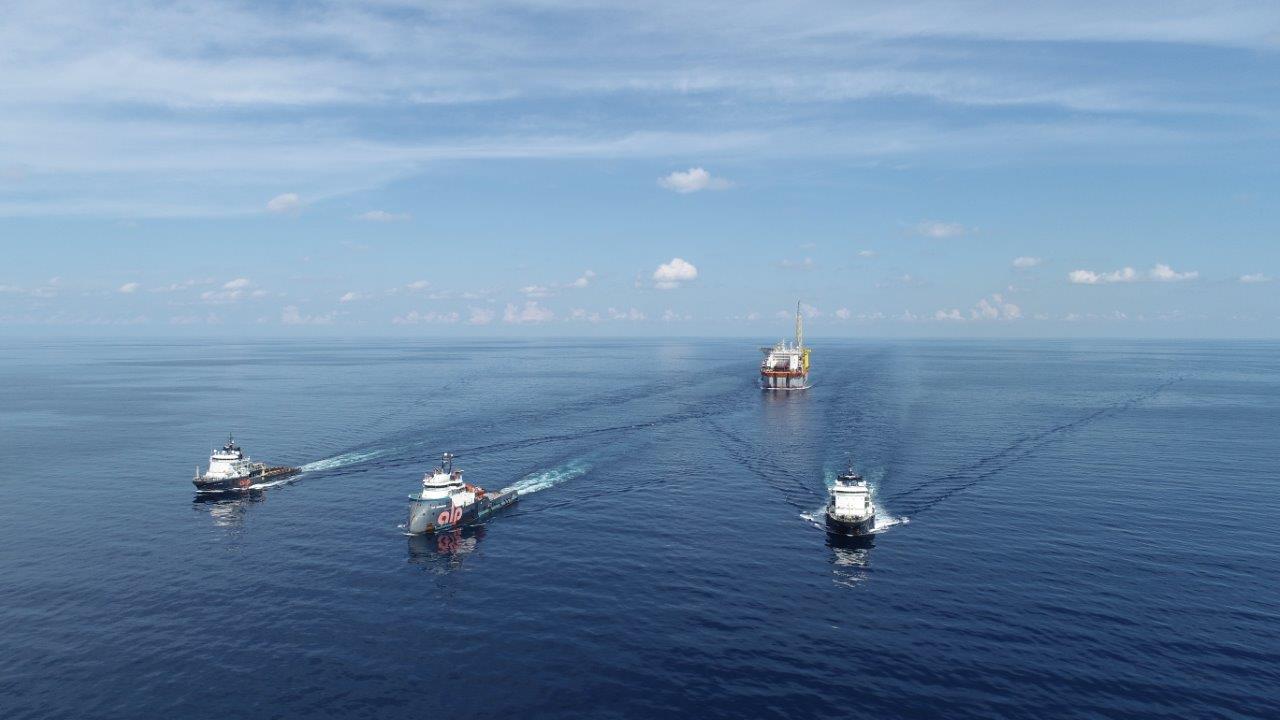
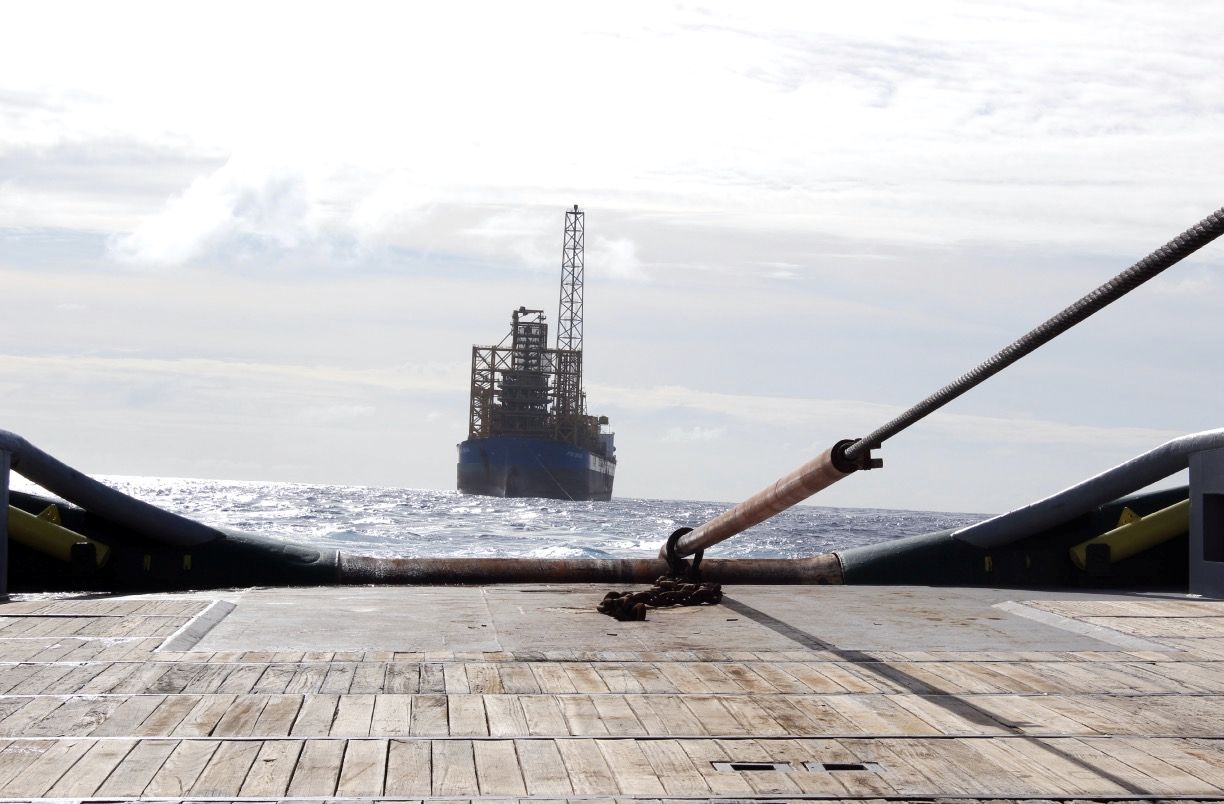
Every ocean tow starts with the same number: bollard pull. It sits at the top of the charter enquiry, it's the first line the warranty surveyor checks, and it's usually the figure that decides which tug gets the contract. After three decades of running tows and selecting tugs, I've come to a slightly uncomfortable conclusion: bollard pull is essential, and it is also one of the most over-trusted numbers in our industry.
Let me explain what I mean — because this isn't an argument against bollard pull. It's an argument for reading it properly.
What the number actually is
Bollard pull is a static measurement: a tug pulling against a fixed point in calm, deep water, with the sustained — not peak — reading recorded over a defined interval. That's all it is. It tells you what the tug can deliver at zero speed under ideal conditions.
It does not tell you what the tug delivers at six knots in a following swell off the Cape, with the towline tension cycling and the hull working against its own resistance. Available pull falls away steeply with speed through the water — a tug uses a large share of its power just moving itself. Two tugs with identical certificates can behave very differently once the convoy is making way, because hull form, propulsion arrangement and displacement all shape how much of that certified pull survives at towing speed.
Reading a certificate like a surveyor
When I review a tug for an ocean tow, the bollard pull certificate gets the same treatment as any other controlled document — and a few specific questions:
- Continuous or peak? The figure that matters is the sustained reading. Trials produce an initial spike as the tug takes up clean water; a certificate built on that spike flatters the vessel.
- To which standard, and when? Several trial codes exist, with different durations, towline lengths and site requirements. A figure measured under one code is not automatically comparable to another — and a trial from many years and one propeller polish ago describes a different tug.
This is exactly why our vessel suitability inspections treat bollard pull as one line item among many: winch and towing gear condition, wire certification and traceability, machinery redundancy, endurance and fuel margins, deck layout, manning and — not least — the experience of the people on board. A well-found tug with an honest 90 tonnes is a better ocean tow partner than a tired one with a flattering 120 on paper.
The calculation side: rigorous, but not gospel
On the planning side, DNV-ST-N001 gives us the framework: the tug spread must hold the tow at zero headway against defined environmental criteria — significant wave height, wind and current acting together. From the tow's resistance in those conditions comes the required continuous bollard pull, and from that the spread.
The calculations themselves are naval architecture work — typically provided by the client's engineering team or an independent naval architect we engage for the project. Our job sits on either side of that work, and it's just as important: reviewing the calculation against the actual route, season and tow configuration before it goes anywhere near the warranty surveyor, and then living with the result at sea. Because anyone who has reviewed enough of these will tell you the same thing: resistance formulae carry assumptions, and different accepted methods can return required figures that differ by a meaningful margin for the same tow. That's not a reason to distrust the process — it's a reason to have someone with towing experience read the inputs critically. The calculation sets a defensible, auditable minimum. It doesn't replace judgement about which tug, in what condition, with which crew.
This is also why we verify performance at sea rather than filing the calculation and forgetting it. On a long ocean tow we compare predicted resistance and speed against what the convoy actually achieves, day by day, against forecast and observed weather. The calculation is the hypothesis; the voyage is the test. Feeding that data back sharpens the next prediction — one more loop our quality system is built to close.
Horses for courses
One more trap worth naming: bollard pull says nothing about what a tug is for. A harbour tug and an ocean-going tug can carry the same number on the certificate and have almost nothing else in common — length, freeboard, winch arrangement, endurance, seakeeping. Presenting a harbour tug for an ocean passage because "the BP is adequate" is a commercial decision masquerading as a technical one, and it's the kind of decision a structured suitability assessment exists to catch before the weather does.
The takeaway
Bollard pull is the entry ticket, not the decision. Use it the way it deserves: a certified, comparable, properly-understood measurement that opens the conversation about tug selection — and then let the rest of the assessment do its work. The tows that go well aren't the ones with the biggest number on the certificate. They're the ones where somebody checked everything behind it.
Barge Solutions B.V. provides bollard pull and tow calculation reviews, tug suitability inspections and Tow Master services for ocean towage worldwide — to DNV-ST-N001, under an ISO 9001-aligned management system. Talk to us about your next marine operation.