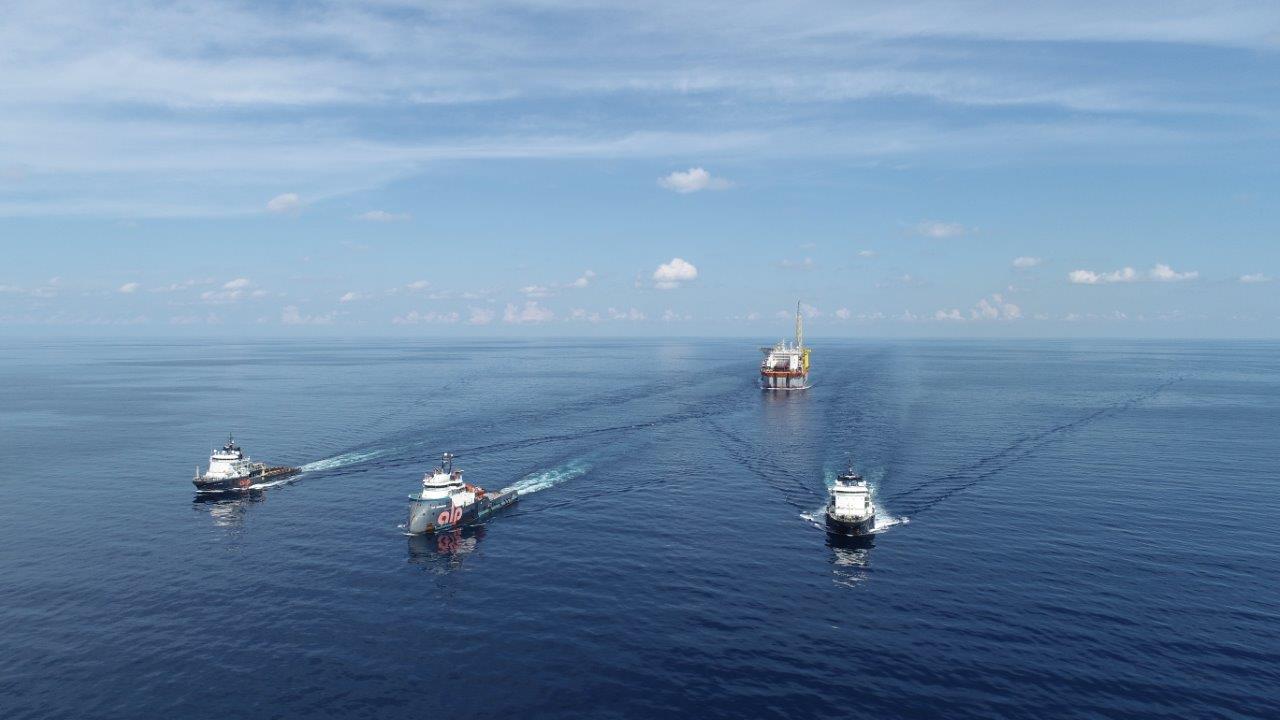
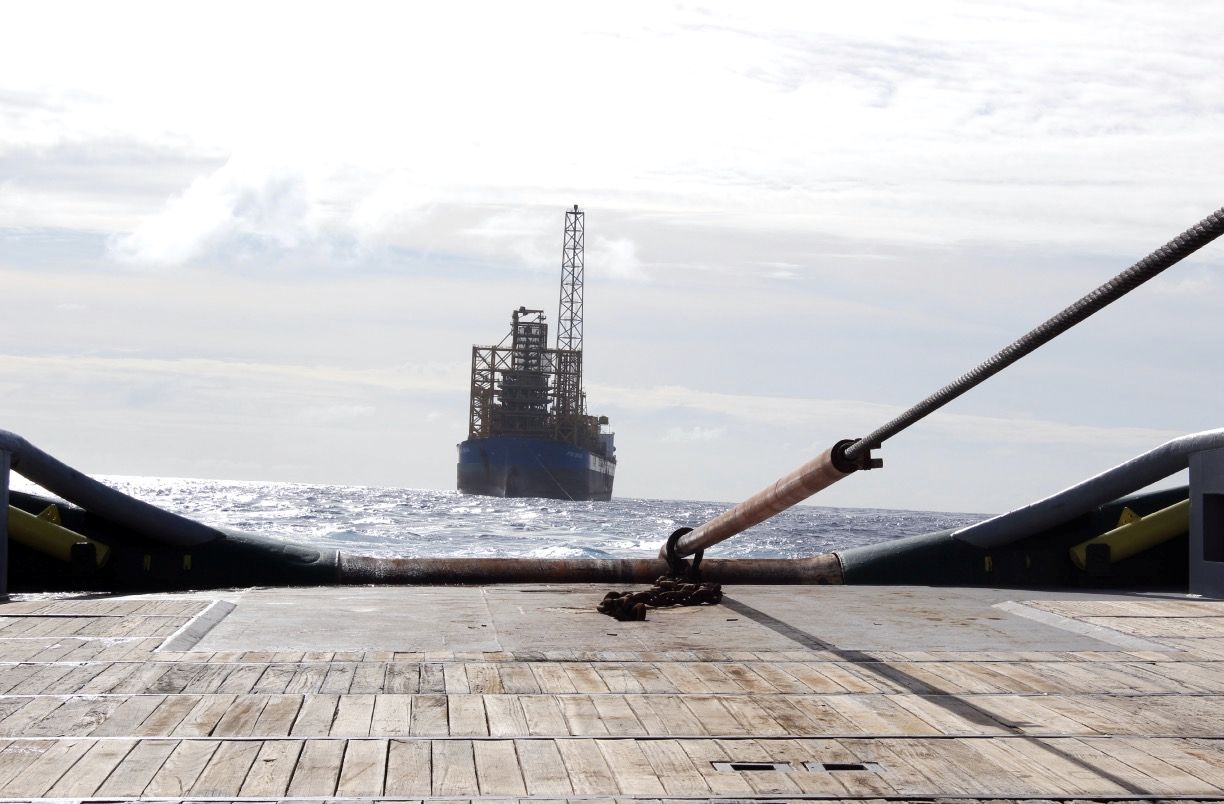
When people picture an FPSO tow, they picture the convoy: tugs straining ahead of a hull the size of a small refinery, somewhere in open ocean. That's the photogenic part. But after thirty years in ocean towage, I can tell you the outcome of that voyage was decided months earlier — sometimes before the building contract was even signed — in calculations, inspections and approvals that nobody photographs.
An FPSO is one of the most valuable single objects that will ever move across an ocean. Whether its delivery voyage becomes a controlled marine operation or an exercise in hope comes down to one thing: the discipline of the preparation. Here's how we run it.
Every tow is unique. The process must not be.
Different hull, different route, different season, different tug spread — no two tows are alike. That's exactly why we run every one through the same framework: DNV-ST-N001 and our ISO 9001-aligned quality system.
In practice, that system does four things a spreadsheet and good intentions can't:
- Nobody sails on a superseded drawing. Tow manuals, bollard pull calculations and contingency plans live under revision control with formal review and approval.
- Nobody wonders who's in charge. Tow Master, tug masters, owner's rep, warranty surveyor — the command and reporting structure is on paper before departure, not improvised at sea.
- Findings get closed, not buried. A survey finding or an en-route deviation goes through a formal non-conformance process — raised, dispositioned, verified closed. Not an email thread that fades away.
- Every voyage makes the next one better. Lessons learned feed straight back into our procedures.
Phase 1 — Can this tow be done? (start before the contract is signed)
The early work answers one blunt question: can this unit be towed safely, on this route, in this season, within this budget?
Here's the part most preparation timelines get wrong: this question should be asked before the construction contract between the FPSO builder and the oil company is signed — not six months before sail-away. Two decisions get locked in at contract stage that no amount of good preparation can later undo:
- The delivery season. The contractual completion date determines when the tow happens — and on a long-haul route, the season is not a detail. A rounding of the Cape of Good Hope in southern winter is a fundamentally different operation from the same passage in summer. If the contract schedule pushes the tow into the wrong season, the project inherits weather downtime, harder routing decisions and tighter weather windows before a single drawing is approved. A voyage feasibility check at contract stage costs days; discovering the problem at sail-away costs a season.
- The towing hardware. Smit brackets, towing connection points, fairleads, emergency towing and recovery arrangements — these are structural items that belong in the hull design and build scope. Positioned and dimensioned properly from the start, they give the tow the geometry and redundancy it needs. Retrofitted or compromised late, they impose operational limitations the convoy carries for the entire voyage: restricted connection angles, awkward reconnection procedures, gear that can't be reached in a seaway.
Once the project is under way (typically 6–12 months out), the feasibility work deepens. Route and season choices shape everything downstream — take a Singapore-to-South America delivery: you're reckoning with the Agulhas Current, Southern Ocean swell, and weather-window decisions that ripple through the whole plan. In parallel, the towing resistance and bollard pull calculations take shape — naval architecture work, delivered by the client's engineering team or an independent naval architect engaged for the project. Our job is to review those numbers against the real route and season, and translate them into operational decisions: how many tugs, what class, and what redundancy philosophy. Add a first look at stability in the tow condition, and agree the standard and the Marine Warranty Surveyor's scope early — sorting that out late is how projects buy expensive rework.
The output is a basis of design that owner, contractor, insurers and MWS can all sign up to.
Phase 2 — Engineering it on paper (3–6 months out)
This is tow manual season. The tow manual is the one controlled document that describes how the voyage will actually be run: convoy composition and towing arrangements, the passage plan with its decision points, weather criteria for departure and for every leg, ports of refuge with entry criteria, contingency procedures for tow line failure, tug loss or heavy weather, and the communication and command structure — including exactly what authority the Tow Master carries.
Around it sit the supporting calculations and drawings: towing arrangements, sea-fastening design, ballast and stability cases. The whole package goes to the warranty surveyor — and under DNV-ST-N001, their approval is the gate. No approval, no tow.
Phase 3 — Making steel match paper (1–2 months out)
Engineering approval means nothing if the vessels don't match the documents. So we go and check.
Every tug in the spread gets a structured suitability inspection — towing gear certification, winches, machinery, manning, documentation — with findings graded and closed out before sail-away. On the towed unit: sea fastenings per approved drawings, watertight integrity verified, emergency towing gear rigged and reachable, ballast condition set against the approved stability case. Every tow wire, shackle and smit bracket is traced from certificate to the actual component on deck.
Then the warranty surveyor attends the final surveys. Open findings get cleared through the non-conformance process — not negotiated away on the quay.
Phase 4 — The departure gate
Departure day is procedural, not ceremonial. Four things have to line up at once: a forecast weather window that meets the tow manual's criteria, an unconditional MWS Certificate of Approval, the Tow Master's confirmation of readiness, and the reporting and shore-support machinery switched on.
And the discipline doesn't stop at the sea buoy. Daily progress reports, forecast-versus-actual weather verification, fuel tracking, and pre-agreed decision points where route options are exercised on conditions — not on gut feel. Deviate from the tow manual, and it's documented, assessed, and where warranted raised as formal management of change.
The loop closes after arrival
An ocean tow doesn't end when the destination comes over the horizon. It ends when the unit is safely moored — alongside in a port, or with storm-safe mooring achieved at the offshore location. On an FPSO delivery, those final miles and the hook-up that follows are an operation in their own right: station keeping and heading control while mooring lines are connected, and the tow isn't handed over until the unit can ride out weather on its own moorings.
And even then, the project isn't finished. Every tow ends with a structured close-out: performance reviewed against plan, non-conformances verified closed, and lessons fed back into the procedures the next tow will start from.
That feedback loop is the quiet reason experienced towage teams keep getting safer. The spectacular part of an FPSO tow is the convoy at sea. The safe part was built months earlier — one controlled document at a time.
Barge Solutions B.V. provides Tow Master services, voyage planning, tow manual authoring and marine warranty interface for ocean towage worldwide — to DNV-ST-N001, under an ISO 9001-aligned management system. Talk to us about your next marine operation.